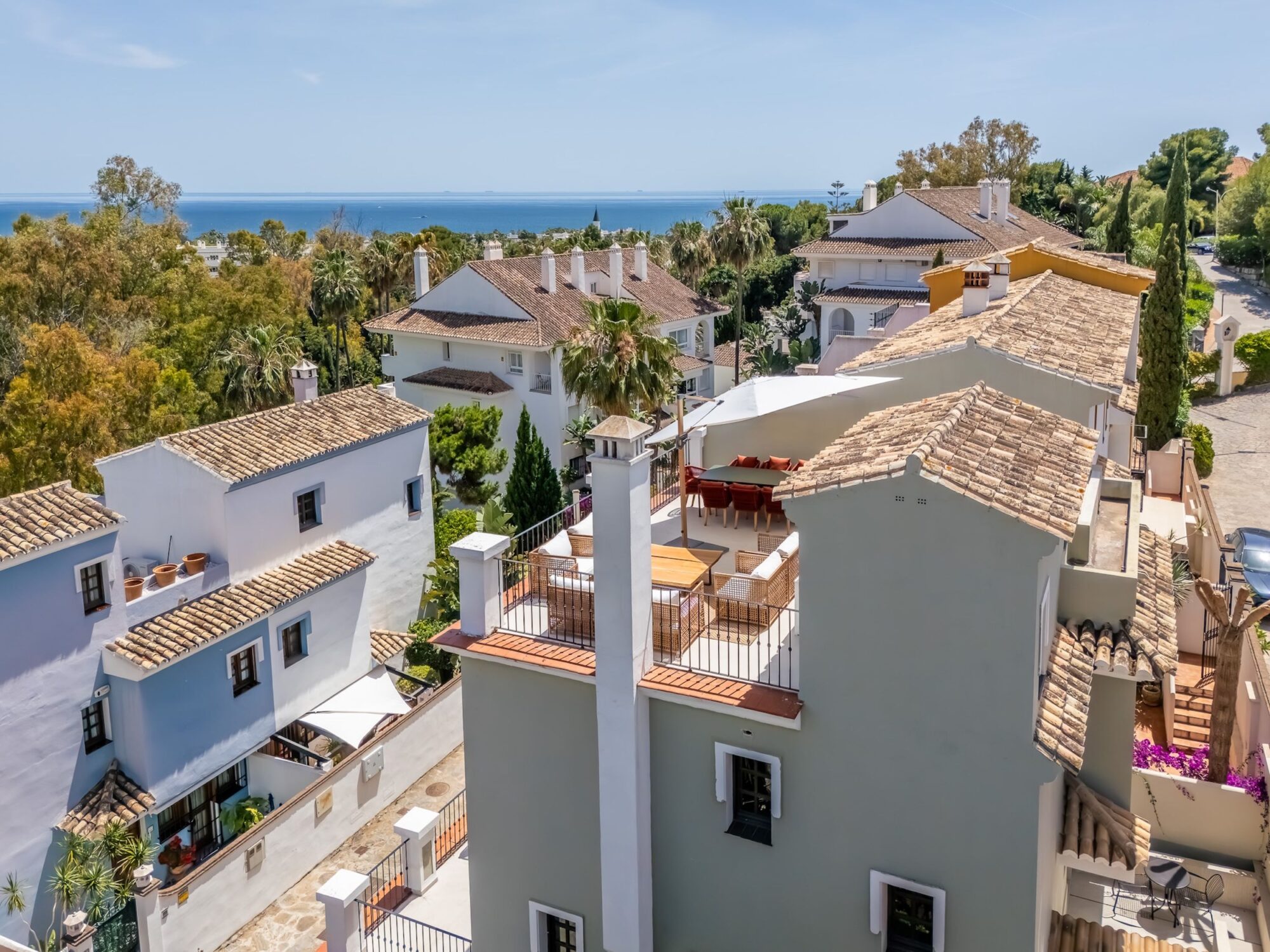
Understanding the Legal and Fiscal Context of the Plusvalía Tax
The Plusvalía Tax in Marbella, officially known as the Impuesto sobre el Incremento del Valor de los Terrenos de Naturaleza Urbana (IIVTNU), is a municipal tax applied to the increase in the value of urban land when it changes ownership. It is one of the most significant Marbella Property Taxes and directly affects property sellers, heirs, and donors. As part of Spain’s broader Property Tax in Spain system, it operates at the local level and plays an essential role in municipal finance, generating millions annually for town halls across Andalusia and beyond.
In 2021, Spain’s Constitutional Court (Tribunal Constitucional de España) ruled that the old calculation method was unconstitutional, prompting a reform through Royal Decree-Law 26/2021. This landmark ruling—reported widely by El País Economía—led to the introduction of two distinct methods for determining taxable gain, giving property owners greater clarity and fairness.
The Two Methods for Calculating Plusvalía
The Objective Method
The Objective Method bases its calculation on coefficients applied to the cadastral value of the land, taking into account the number of years of ownership. This remains the default approach used by most Spanish municipalities, including Marbella. The Ministry of Finance publishes updated coefficients annually in the Official State Gazette (BOE), ensuring alignment with inflation and market changes. In practice, this system simplifies calculations but may not always reflect real-world fluctuations in property prices.
The Real Estimation Method
The Real Estimation Method offers taxpayers an alternative by considering the actual increase in land value between purchase and sale, based on notarized transaction values. This method is particularly beneficial when a property’s market value has not appreciated substantially. For instance, according to Idealista News (2025), land prices in Marbella’s Golden Mile surged 12 % year-on-year, yet some inland properties experienced minimal growth—scenarios in which the Real Estimation Method can substantially reduce the Property Tax in Marbella owed.
Who Pays and When
Responsibility for the Plusvalía depends on the nature of the transaction:
- Sale: The seller generally pays the tax.
- Inheritance or Donation: The heir or donee becomes liable.
- Non-Resident Transfers: Under certain Notary Process in Marbella agreements, the buyer may assume the obligation if negotiated during the sale.
These distinctions form part of broader Property Taxes in Spain that vary between residents and non-residents. Inheritance-related transfers often intersect with Property Inheritance in Marbella and require careful Estate Planning in Marbella to minimize exposure.
Factors Influencing the Tax Amount
Several variables affect how much Plusvalía you’ll pay:
- Cadastral Value: Determined by Spain’s land registry, this is the foundation for the taxable base.
- Ownership Duration: The longer you hold the property, the higher the applicable coefficient—up to the legal maximum of 20 years.
- Local Rates: Each town hall sets its own percentages. Marbella’s coefficients are updated annually to reflect Marbella Property Regulations and urban-planning dynamics.
- Land Improvements: Significant renovations can increase the land’s taxable value, even if building value remains constant.
Municipalities like Marbella publish current coefficients in their Boletín Oficial de la Provincia de Málaga, ensuring transparency. The 2025 update introduced slight adjustments to align with land appreciation patterns observed by the Ministry of Finance.
Recent Legal and Market Developments
Following the 2021 ruling, Spain’s Supreme Court reaffirmed taxpayers’ right to challenge the Objective Method when it yields a higher liability than actual market appreciation. This decision has led to an uptick in refund claims nationwide, with over €230 million returned to property owners between 2022 and 2024 (El País Economía).
At the same time, Marbella’s real-estate data—drawn from Financial Times and local registries—shows steady property appreciation, with luxury plots near Sierra Blanca rising 8 % year-on-year. Consequently, sellers in these zones should factor the Plusvalía into their Marbella Property Investment Strategies to avoid profit-margin erosion at closing.
Exemptions and Reductions
Not all transfers are taxable. Spanish law recognizes several exemptions under Property Due Diligence in Marbella guidelines:
- Sales completed at a loss are exempt if the owner can document negative capital gains.
- Transfers between spouses upon death often qualify for exemption or reduction, depending on municipal regulations.
- Certain family inheritances and donations within first-degree relatives benefit from local reductions, especially in Andalusia, where municipal reforms favor generational property continuity.
For instance, Marbella’s Town Hall approved a 2024 measure reducing Plusvalía by 50 % for heirs inheriting a primary residence valued below €400,000—a policy designed to ease intergenerational transfers in high-cost areas.
Calculating and Paying the Plusvalía
Calculating the tax requires three key steps:
- Verify the cadastral value using your latest IBI receipt.
- Apply the relevant coefficient from Marbella’s published rate table, depending on ownership duration.
- Multiply by the municipal tax rate—typically 25 %–30 % —to determine the final amount.
Payments are made directly to the Marbella Town Hall’s treasury department within 30 days of transfer registration, following the same digital submission process used for other Property Registration in Marbella filings.
Practical Example
Suppose you sell a Marbella apartment with a cadastral land value of €120,000 after 12 years of ownership. If the coefficient is 0.14 and the local tax rate 28 %, the taxable base is €16,800 and the Plusvalía Tax owed €4,704. However, under the Real Estimation Method, if your verified gain is only €10,000, your liability drops to €2,800 —demonstrating the savings potential under the revised system.
Managing and Planning for the Plusvalía
Given the evolving regulatory framework, property owners should regularly consult tax experts familiar with Property Taxes in Spain. Maintaining complete records of acquisition costs, cadastral values, and renovation expenses is essential for substantiating claims and deductions. Coordination with local legal professionals ensures compliance with Marbella Property Regulations and streamlines the Notary Process in Marbella during transfer.
For investors, incorporating Plusvalía estimates into broader Marbella Real Estate Market Insights is prudent. A strategic approach—timing sales, leveraging exemptions, and documenting real appreciation—helps minimize liabilities while preserving returns in a market where land values continue to climb.
Conclusion: Knowledge as Your Best Asset
The restructured Plusvalía Municipal Tax reflects Spain’s effort to modernize its fiscal system while ensuring fairness. Awareness of exemptions, correct calculation methods, and recent jurisprudence allows property owners to navigate this tax effectively. For anyone involved in Property Inheritance in Marbella or considering divesting assets, understanding Plusvalía is vital to optimizing outcomes and maintaining compliance with local and national tax authorities.
By approaching the Plusvalía Tax in Marbella through diligent planning and professional guidance, sellers and heirs alike can safeguard their financial interests in one of Europe’s most prestigious and dynamic property markets.
Schedule a ConsultationSources:
- “El Tribunal Constitucional anula el impuesto de plusvalía municipal” — El País Economía (Nov 2021)
- “El Gobierno devuelve 230 millones en reclamaciones del impuesto de plusvalía” — El País Economía (Dec 2024)
- “Marbella house prices hit all-time high amid surging demand for luxury” — Idealista News (July 2025)
- Tribunal Constitucional de España — Sentencia 182/2021 sobre Plusvalía Municipal
- “Marbella 2.0: Beyond the Bling?” — Financial Times (March 2025)
- Boletín Oficial del Estado (BOE) — Real Decreto-ley 26/2021 sobre la Plusvalía Municipal
- Ayuntamiento de Marbella — Ordenanza Fiscal del Impuesto sobre Incremento del Valor de los Terrenos (2025 Update)

Carin Astrup - Real Estate Agent
Fluent in Swedish, English, Danish, and Norwegian, Carin Astrup works with an elite international clientele, expertly matching buyers and investors with some of Marbella’s most exclusive properties.
Ready to find your dream home or make a smart investment in Marbella? Contact Carin today for a private consultation and unlock access to the Costa del Sol’s finest properties.